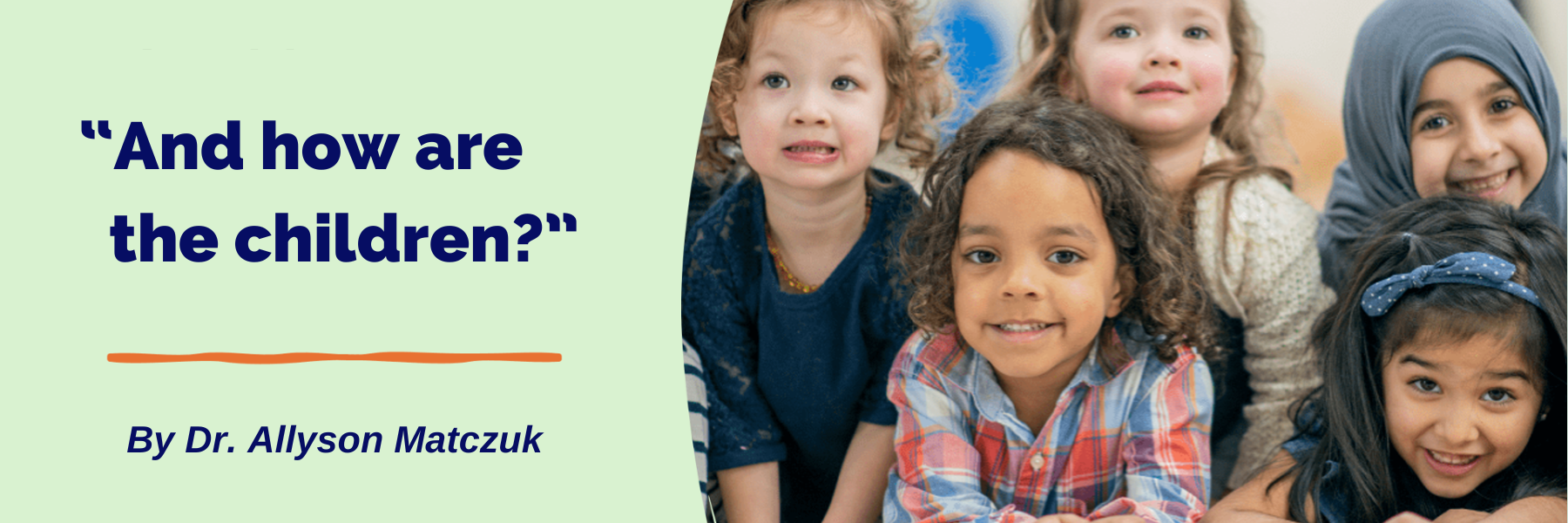
“And how are the children?” by Allyson Matczuk
RRCNA 2024-2025 Board President Allyson Matczuk presented the below address at the closing session of LitCon: National K-8 Literacy and Reading Recovery Conference. It is reprinted here with her permission.
“And how are the children?”
It is an honour to stand here today to address this esteemed gathering. We are here to celebrate not only 40 years of our achievements and passion for children’s literacy learning, but also the spirit of collaboration, and progress that has brought us together.
I hold each person in this group in the highest esteem. You are educators with professional expertise, dedicated to lifting literacy understandings. You oversee the intellectual, emotional, social growth of children.
You have attended this conference to develop your professional understanding, talents, and skills to ensure the health and capacity of our future generation.
I don’t know about you, but my personal journey as an educator could never have been predicted by my first year as a teacher. At the tender age of 22 I stepped into my first classroom as a freshly minted high school mathematics and English teacher, wearing the latest fashion (which included high heel at that time and they mattered since I wasn’t taller than I am today). In one teaching interview I had been asked if I thought I could all students to read, my response had been an animated, “Of course I can, aren’t they all entitled? They all have the right to literacy!” I didn’t get that job. But I did get another one. My students were in a low enrollment grade 12 class and had learning profiles that could be compared to a Jackson Pollack painting. Some of my students were older than I was and (this is a true story) eyed me up as a possible date to the prom. Other novice teachers might have wondered how soon they could put in for a transfer but, as my brother-in-law described me, I was a “bleeding heart who thought she could save the world” … at least all the children in it.
I was an earnest and creative learning professional. I devoured any scraps of professional development tossed my way. I read the curriculum and every professional book I could, to understand what I was trying to do. Now, some 48 years later, I don’t think my dedication to children and teaching has changed. But I have changed. Three events were key in major changes.
First, was a superintendent who believed in the power of the teacher and their creativity and in experience-based learning for students. Second, was my move down the grades until by my 6th year I found myself in a multiage, grade one, two and three classroom. I couldn’t believe I was being paid to have such a good time. Third, and perhaps my greatest change, was becoming a Reading Recovery teacher and joining an international community in 1994. My thinking, my energy, and my enthusiasm for my chosen profession grew exponentially. This group, and others like it around the world, inspire me, shape me, and give me hope for our children’s future.
The title of my brief talk is ,“And how are the children?” The Masai tribe in Africa, including their most fierce warriors with no children, greet each other traditionally with, “And how are the children?” They do not ask each other, “How are you?” or “How’s your day?” but rather they ask about the next generation. The Masai believe that monitoring the well-being of their children is the best way to determine the future health and prosperity of their whole society. I ask you to consider, “How are our children?”
When we think about those closest to the children, those in their immediate contexts … their parents, family, and teachers (Bronfenbrenner would call it their micro ecosystem), how are they? Are they feeling confident and secure in their ability to care for, to be heroes for, and to raise the children? Or has their security been eroded?
In 2010 research re-affirmed that high parent expectations of school and teachers directly related to increased school readiness scores. Parent expectations also had a positive direct relationship to parent involvement in their child’s education.
Research conducted in 2017 found that parents dreamed of teachers who ignited learning flames, not just fill knowledge buckets or teach programs. They craved partners who championed individual sparks, not those who pushed standardized forms. Open communication and growth mindsets, when planted together, nurture happy, lifelong learners.
However, research also showed that when the phrase “possible learning disabilities” was mentioned, parents’ expectations were shattered and relationships with the school often became strained. Over-identification of learning disabilities …. even the garden-variety reading difficulties exacerbated by the pandemic …. resulted in stress for parents and teachers and a desperate search for the silver bullet.
Are those caregivers, parents, families, and teachers still able to support the learners and to wrap them in a safety blanket ? Can they protect them from the cultural, economic, and political influences beyond their control?
Social media is no one’s friend. News cycles are short, fast, and repetitive. The day’s headlines are repeated frequently and by multiple sources, sometimes becoming twisted and sensationalized. Are we getting truth? Is there fact-checking and balance?
Parents worry and teachers are targeted, sparking disagreements, intimidation, and conflict. The sources who foster such conflict are guilty of overlooking reason, of picking and choosing research, of ignoring the incredible skill of educators. You and I know ALL children have the right to engagement, excellence, and equity in literacy instruction. We need to be able to provide all children with whatever they need to experience joyful learning. It takes a teacher’s heart, mind, and professionalism.
It seems to me that as educators we agree on what children need. We may differ on how exactly to provide it. Many children are able to cope with a variety of delivery styles our classrooms, as long as we keep the individual children in the centre. They will succeed. For diverse, vulnerable, inexperienced, or confused learners it matters significantly. We must build our relationships and work together if we want to be able to arrange for success in literacy learning.
As educators, we are sailors, navigating the sea of learning. The seas are stormy now and are likely to become more turbulent. If it’s true that a smooth sea never made a skilled sailor, we must be a superb navy! We need to protect our precious cargo. We can’t control the wind, but we can control the sails. There is no one way to achieve this but by coming together at events such as this, learning from the experiences and knowledge of others.
By engaging in many conversations, we can continually grow as skilled educators, as knowledgeable and cautious consumers, as agile providers of learning experiences that allow for the success of ALL learners in our care. Together we can be brave. We can be persistent. We will not give up.
We must continue to ferry our precious cargo towards a literate life.
RRCNA is a membership-based professional association of Reading Recovery professionals, advocates, and partners, as well as other interested professionals in literacy education. We believe each child is unique and has strengths and needs that vary. We meet kids where they are & give them whatever it takes to help them catch up. There is a mountain of research around the reading sciences, but results matter most. Our results are unimpeachable.
For 40 years, Reading Recovery, DLL, and IPLE have helped first graders who struggle with reading get back on track with their peers. With Literacy Lessons we are reaching a broader clientele.
As a not-for-profit professional association, RRCNA provides opportunities for leadership and professional development and is an advocate for literacy learning throughout North America. Additionally, RRCNA facilitates the peer-to-peer community among professionals.
I would like to urge every educator in this audience to purchase a membership and to contribute to the Foundation for Struggling Readers in some way. This provides unlimited access to our publications and resources, our professional learning events both on-line and in-person, and supports the ongoing, current research that matters to teachers. We act as advocates with the broader political entities in state, provincial, and national contexts to give voice to reason and to champion the cause of equity.
Let’s pledge to stay the course, to recover the learners drifting off course, doing all that has been proven to close the gap between the lowest and highest achieving students. There has been some seriously bad weather over the past few years and there is more coming.
Only if we work together, to be an ever-improving body of teachers working to provide what we know is best for the children we work with, will peace and safety prevail; the priorities of protecting the young and the powerless be in place. The Masai people do not forget their reason for being, their proper function, and their responsibilities. We must ensure that life is good and that the daily struggles include the proper care for everyone. Only then will we be able to reply, “all the children are well”.
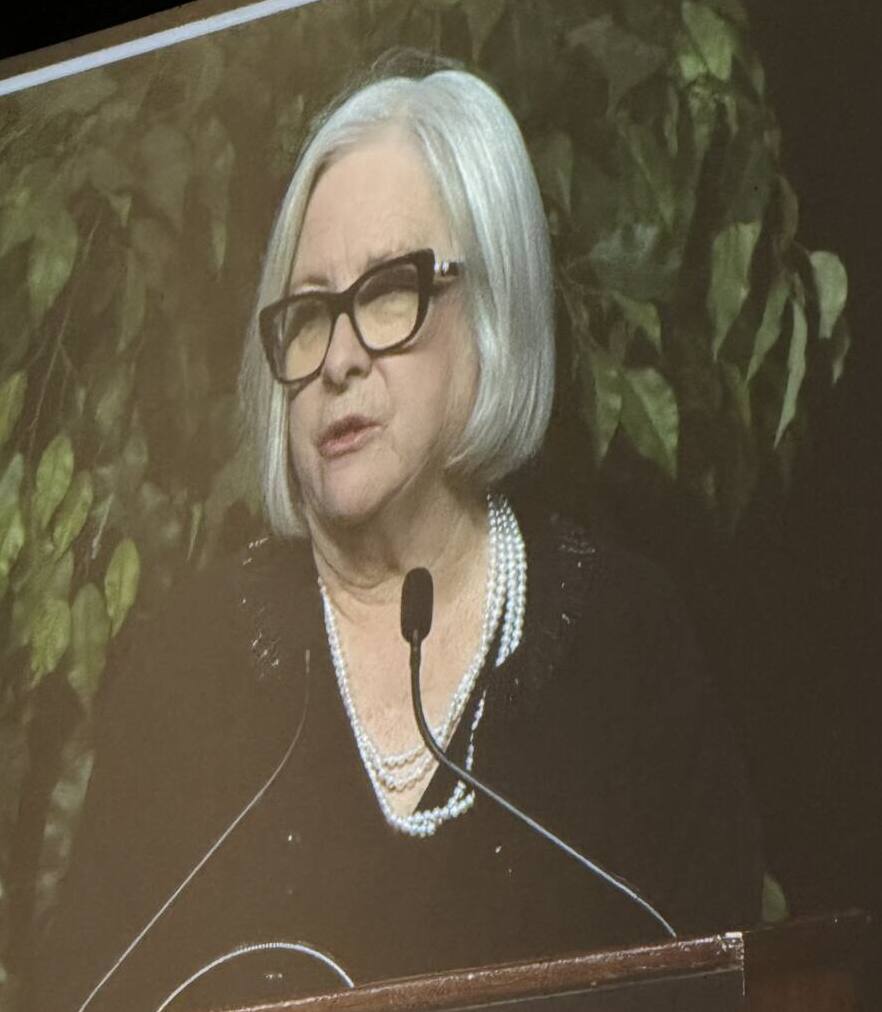
ABOUT THE AUTHOR
Allyson Matczuk, Ph.D. has worked at all grade levels and in special education in the Manitoba public school system. Her experience in Reading Recovery began in 1994-95 when she trained in the first group of RR teachers in the province. In 1997-98, she trained as a Teacher Leader and worked across school districts in the province. Allyson earned her Ph.D. at the University of Manitoba where she studied language and literacy, and later trained as a Trainer at the University of Auckland.